

About Reverse Rotation
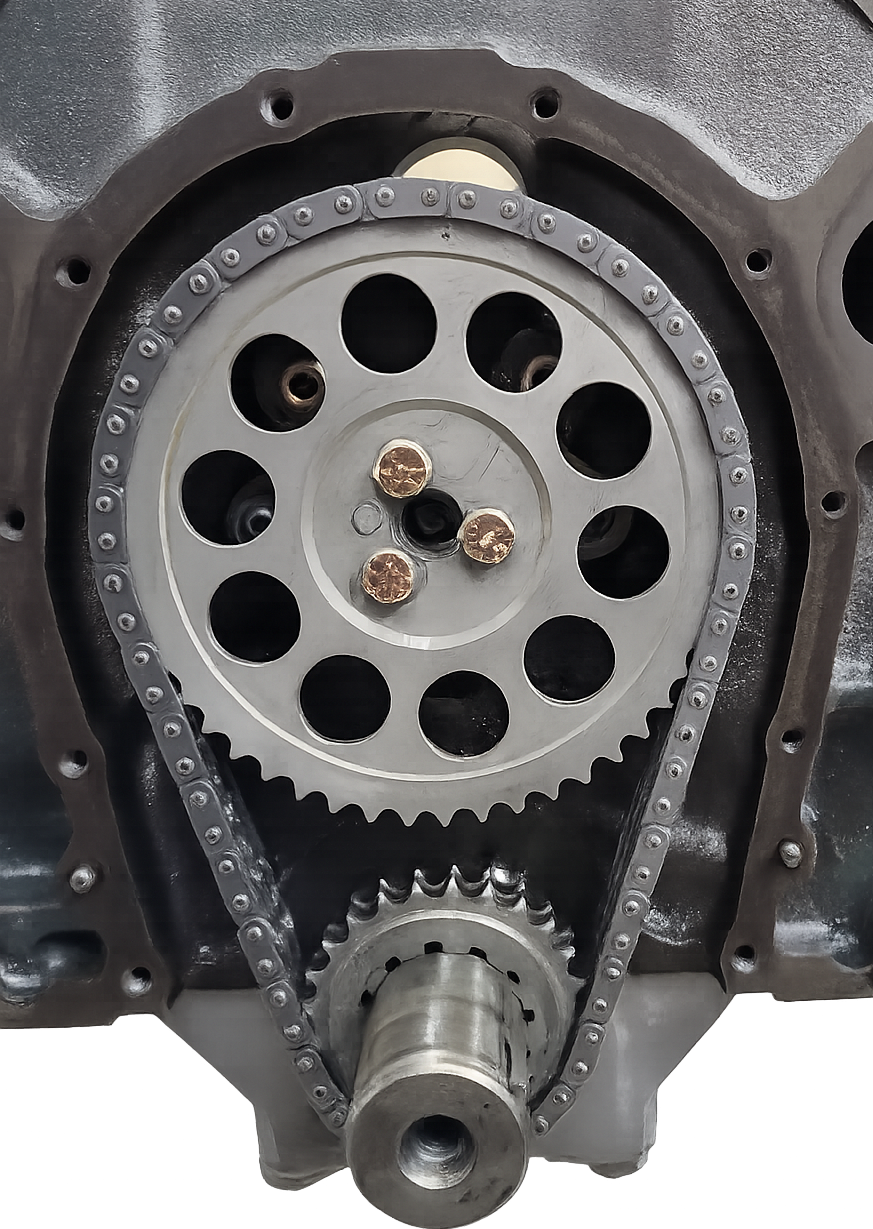
Above: FTR Cam & Motor Works’ dual chain timing set, allowing for custom cam timing.
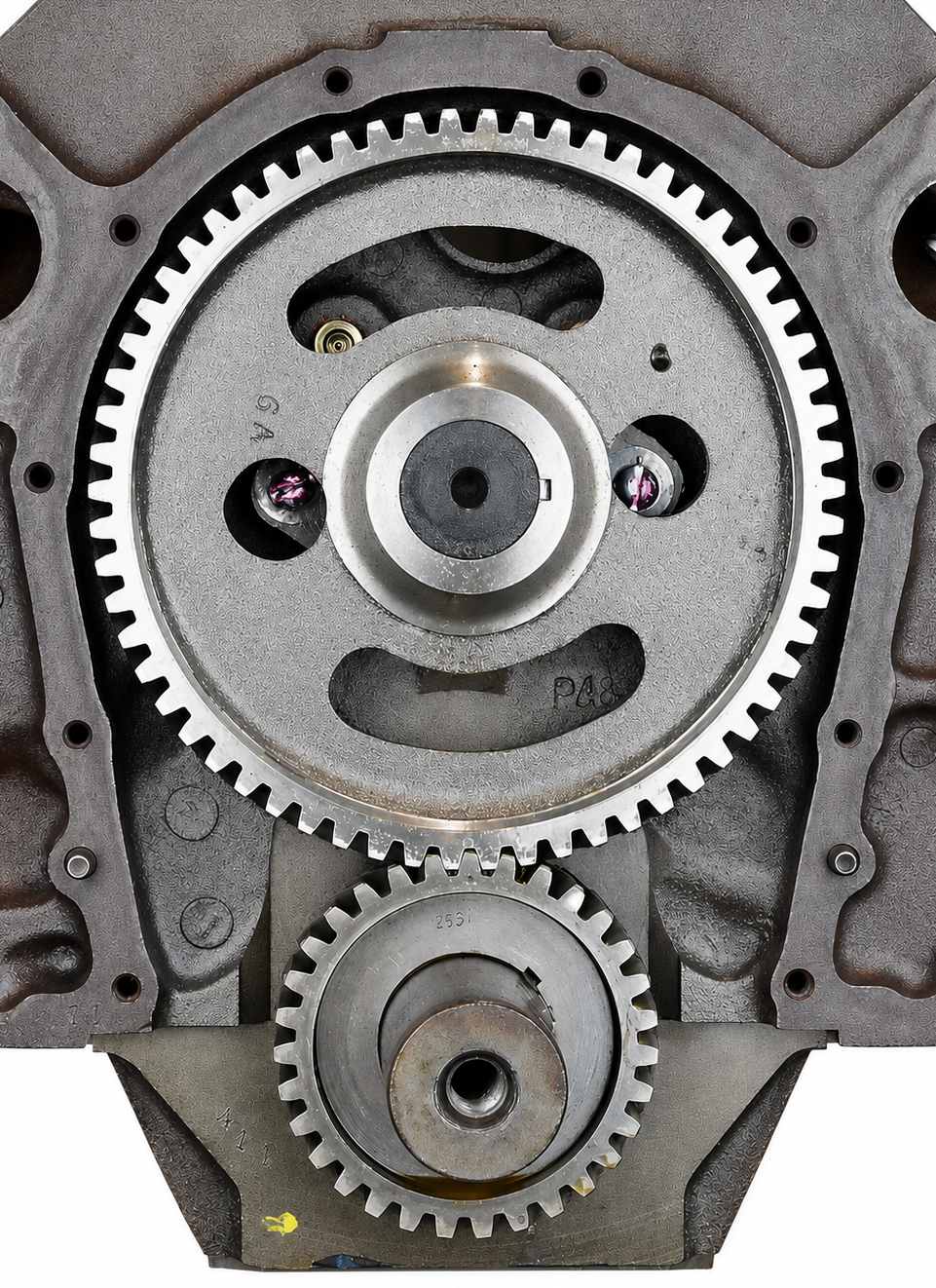
Below: Traditional “gear on gear” typically used to achieve reverse rotation.
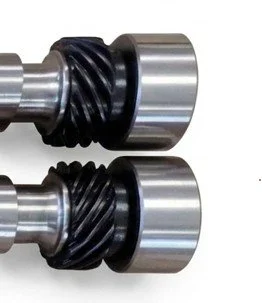
Below: Reverse cut distributor drive gears.
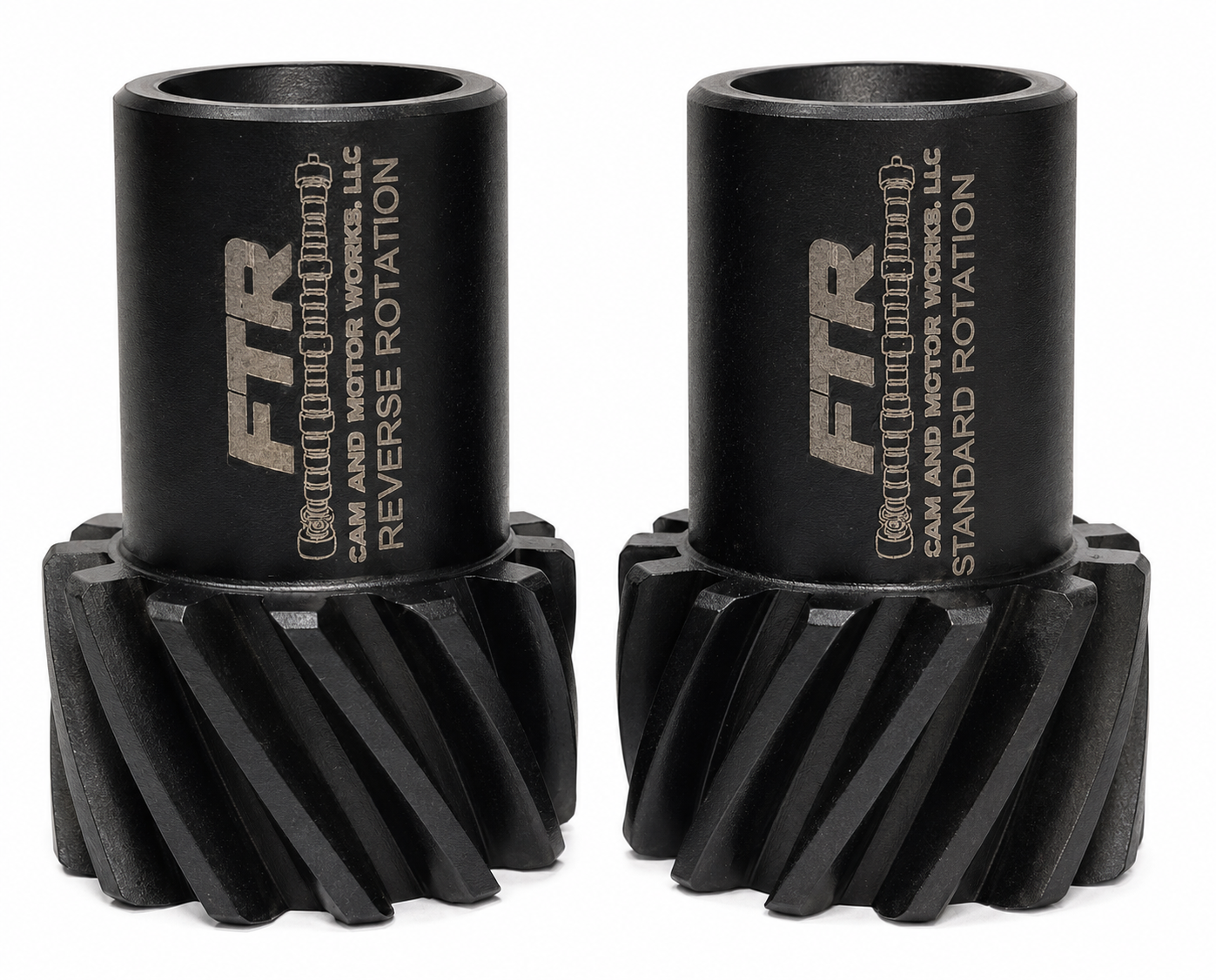
Below: Specialty coated reverse distributor gears
A reverse rotation marine engine can be identified by viewing the flywheel’s rotational direction from the flywheel side, or the rear of the engine. If the flywheel is spinning clockwise, it is a reverse engine, commonly referred to as right hand (RH) rotation.
Our reverse rotation camshaft kit incorporates a roller camshaft and hydraulic roller lifters. It eliminates outdated flat tappet designs and the problems associated with modern day replacements, i.e. poor quality metals, poor hardening, mismatched cam lobe and tappet profiles, and engines failures due to oil use without zinc included, etc.
We custom manufacture the only marine reverse rotation hydraulic roller lifter camshaft for the 7.4 liter gm big block available on the market; 100% made in the USA.
Issues to consider with reverse direction that are addressed with our kits:
Distributor Driver Gear and Distributor Gear - When an engine runs in reverse with our dual chain timing set, the camshaft also rotates in reverse, i.e., clockwise. When an engine spins in standard rotation, the camshaft spins counterclockwise. A standard counterclockwise distributor gear angle used with a roller chain would not engage, and if it were able to, it would be spinning the distributor and oil pump backwards. Our kit includes a specialty coated reverse distributor gear and reversed distributor driver gear on the camshaft. These gears and the coating are exclusive to FTR Cam and Motor Works and are key to durability and long engine life. Because FTR’s reverse cam uses a reverse-cut gear set to keep the distributor spinning in it’s normal clockwise direction, your oil pump will also spin clockwise. This means you can use a standard oil pump on both engines, or consider upgrading to our high volume oil pump at a fraction of the cost of an OEM Crusader or Mercruiser replacement pump.
Distributor Thrust Load – Reversing the cut of the gears flips the physical forces inside the engine. Instead of pushing the distributor shaft up out of the block, a reverse-mesh gear pulls the distributor down into the block. Customers should verify their distributor can handle this change, or consider upgrading to our Pertronix distributors that have our proper distributor gear already installed. It is imperative that the distributor gears supplied with our kit are installed and used correctly for their respective LH and RH rotation engines, regardless of what brand distributor is being used.
Camshaft Walk – We utilize a camshaft retaining plate to eliminate any camshaft walk that may occur from the differing distributor gear loading.
Elimination of Gear on Gear - The FTR reverse direction kit eliminates the stock “gear on gear” traditionally used between the crankshaft and camshaft. This further eliminates NVH (noise, vibration, and harshness), while delivering more consistent cam timing and dampened input into the valve train. Gear on gear, or twin-gear setups, can transmit crankshaft torsional vibration into the valve train. This is one reason why FTR specs a premium Rollmaster Gold Series double chain timing set, consisting of IWIS chain, Torrington bearing, and nitrided gears. Our dual chain timing setup also allows for adjustable camshaft timing, allowing additional customer fine tuning. With extensive dyno testing, we found that 2 degrees of initial cam timing delivers the best run quality and hp/torque yields.
Firing Order - You cannot use a standard V8 firing order on a reverse-rotation engine. The firing order for a Big Block Chevy is: 1-8-4-3-6-5-7-2, the reverse rotation firing order must be 1-2-7-5-6-3-4-8.
Reverse Crankshaft Oil Seal – A reversed crank seal is recommended to best eliminate oil seepage at the rear of the crankshaft.
Pistons May Need to Go in Backwards, Starter Reversed – In reverse rotation engines, if the pistons feature an offset pin, or a major/minor thrust side, the pistons need to be installed backwards. The starter also needs to be reversed. These and other considerations need to be addressed, and we recommend working with a professional engine rebuilder experienced with such rebuilds.
Why buy the FTR Kit?
Finding a shop that keeps reverse-rotation V8 roller cams on the shelf is not possible. Sourcing all those components individually turns into a very timely endeavor and raises compatibility issues with individual parts and pieces. Let us save you weeks of lead time and a lot of custom-ordering headaches. Because reverse-rotation setups are still required for many dual-engine marine builds, you can acquire a roller cam setup through FTR Cam and Motor Works.
FTR camshafts work in Mark IV, Gen V, and Gen VI big block engines. The kits include all the parts needed to upgrade from flat tappets to a roller camshaft, including lifters, rockers, correct distributor gears, retaining plates, proper push rods, and correctly sized valve springs with retainers and locks.
Our camshafts are an excellent substitute for Melling, Elgin, Comp Cams, as well as OEM cams used in several models of Crusader, Mercruiser, Volvo, and OMC 7.4/454 engines.
The roller camshaft alone can contribute up to 20% gains in torque and 48% in horsepower.
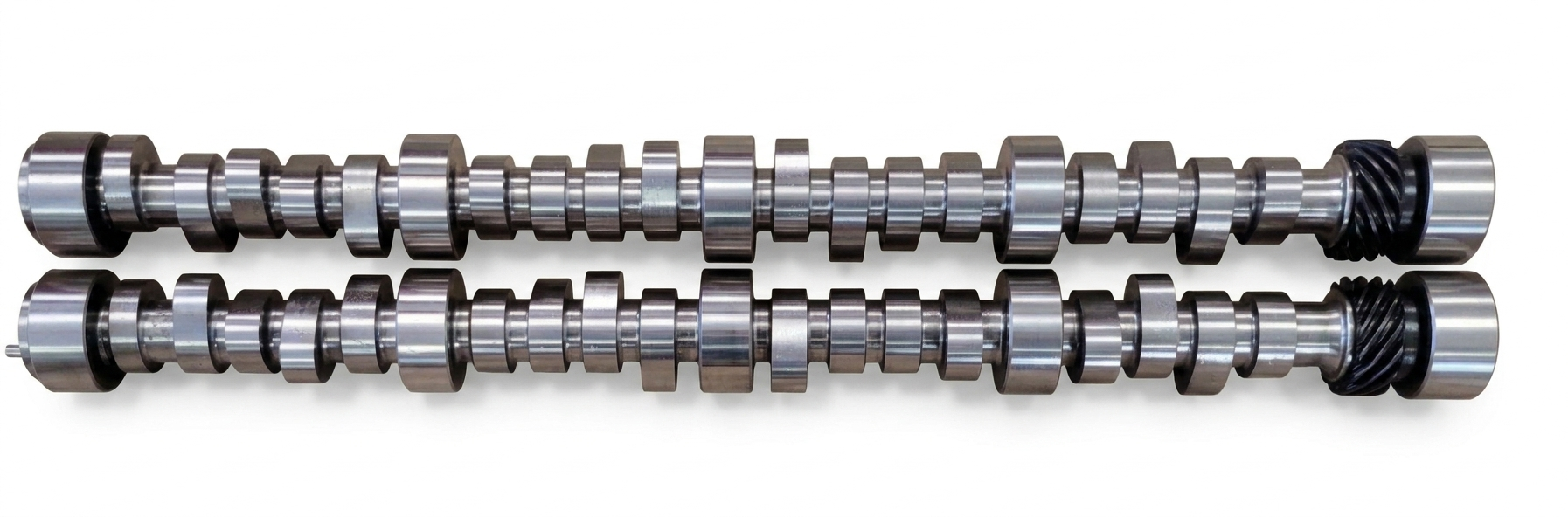
Below: Left Hand and mirrored Right Hand / Reverse rotation Camshaft
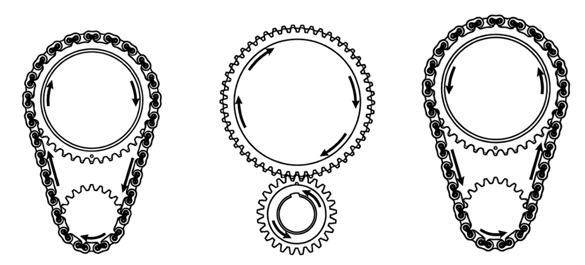
Standard Rotation Chain Drive
Typical Reverse Rotation / “Gear on Gear” used by OEM’s.
FTR’s Reverse Rotation Achieved via Chain Drive
******** AS VIEWED FROM THE FRONT OF THE ENGINE ********